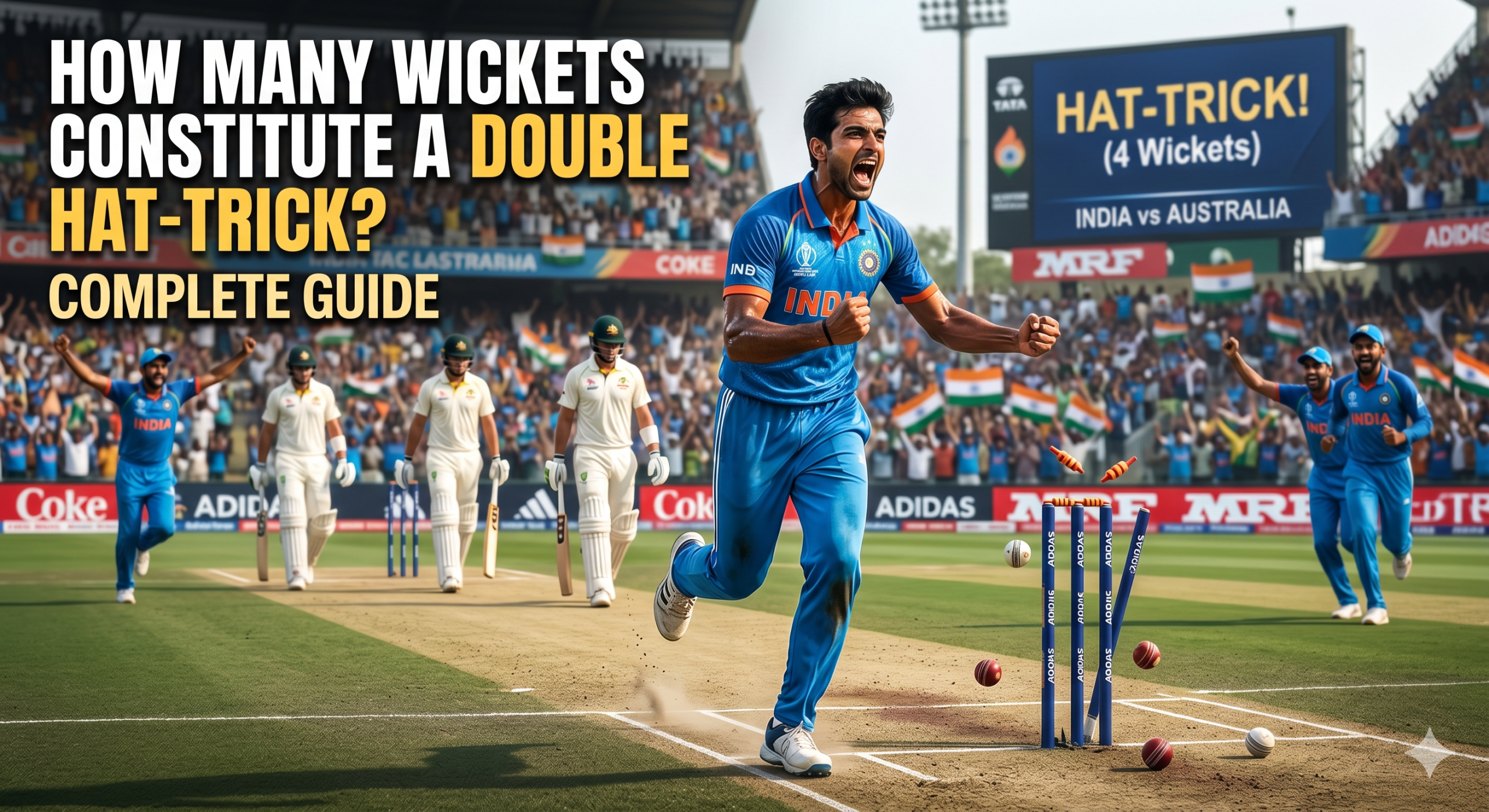
In cricket, a hat-trick is one of the most celebrated feats a bowler can achieve. But sometimes, fans and commentators talk about a double hat-trick—a term that sparks curiosity among cricket enthusiasts. If you’re wondering how many wickets constitute a double hat-trick, this guide will explain everything in detail, including rules, famous examples, records, and cricketing trivia.
Understanding a Hat-Trick in Cricket
Before we dive into double hat-tricks, it’s important to understand what a hat-trick is.
A hat-trick occurs when a bowler takes three wickets with three consecutive deliveries. These deliveries can span across:
- Overs (even if interrupted by other bowlers)
- Innings (if the bowler continues in the same match)
Hat-tricks are rare and celebrated because they require skill, focus, and a bit of luck.
Key Points About a Hat-Trick
- Three Consecutive Wickets: Must be on three legal deliveries bowled by the same bowler.
- Same Bowler: The bowler must take all three wickets personally.
- Legal Deliveries: Wickets from no-balls or wides do not count.
- Across Overs or Innings: A hat-trick can span overs, even if there’s a break in between deliveries.
Hat-tricks are recorded in cricket statistics and often earn a bowler special recognition or awards.
What Is a Double Hat-Trick?
A double hat-trick is an even rarer achievement. But the question arises: how many wickets constitute a double hat-trick?
Definition
A double hat-trick occurs when a bowler takes four wickets in four consecutive deliveries.
Unlike a single hat-trick, which requires three wickets, a double hat-trick is an extension that requires one extra wicket. In some informal discussions, a double hat-trick might also refer to five consecutive wickets, but officially in cricket records, four wickets in four balls is considered the standard definition.
Key Points About Double Hat-Tricks
- Four Consecutive Wickets: The bowler must take four wickets in four consecutive legal deliveries.
- Same Bowler: All four wickets must be taken by the same bowler.
- Legal Deliveries: Wickets must be on valid balls. No-balls or wides do not count.
- Across Overs or Innings: Like hat-tricks, double hat-tricks can span overs or innings, provided the bowler continues bowling consecutively.
In short: A double hat-trick = 4 consecutive wickets.
Famous Examples of Double Hat-Tricks
Double hat-tricks are extremely rare in international cricket. Here are some notable instances:
- Lasith Malinga (Sri Lanka): In a T20 World Cup match, Malinga took four wickets in four consecutive balls, astonishing fans worldwide.
- Yuvraj Singh (India): In the 2007 T20 World Cup, Yuvraj Singh took six wickets in six balls against England, technically achieving a double hat-trick and beyond.
- Fred Spofforth (Australia): In 19th-century cricket, Spofforth took four consecutive wickets in a Test match, showcasing early instances of double hat-tricks.
These examples highlight how difficult and special this feat is. Only a few bowlers have ever achieved it at the international level.
Double Hat-Trick vs. Hat-Trick
To clarify the difference:
| Feature | Hat-Trick | Double Hat-Trick |
|---|---|---|
| Number of Consecutive Wickets | 3 | 4 |
| Frequency | Rare | Extremely rare |
| Records in Cricket | Many recorded | Very few recorded |
| Recognition | Often awarded player of the match or media recognition | Highly celebrated, sometimes historic |
Double hat-tricks are significantly rarer and often make headlines because four consecutive wickets are far more difficult than three.
Can a Double Hat-Trick Include Over or Innings Breaks?
Yes, as long as the bowler delivers four consecutive legal deliveries. Here’s how it can happen:
- Across Overs:
- Last ball of one over takes a wicket
- Next three balls in the bowler’s next over take three wickets consecutively ✅ This counts as a double hat-trick
- Across Innings (rare cases):
- Bowler takes wicket on last ball of an innings
- First three balls of next innings take wickets consecutively ✅ Technically counts as consecutive wickets by the bowler
Cricket laws allow this because the bowler is delivering consecutive balls, even if overs or innings separate them.
Rules Regarding Wickets for a Double Hat-Trick
- Valid Wickets Counted: Bowled, LBW, caught, stumped, and hit wicket all count.
- No Contribution from Extras: Wickets resulting from no-balls or wides do not count.
- Same Bowler Requirement: Only the bowler delivering the ball gets credit.
- Scoring: Both the bowler and team get the benefit in statistics.
How Often Do Double Hat-Tricks Occur?
Double hat-tricks are extremely rare in cricket history. In international cricket:
- Tests: Only a handful of bowlers have achieved four consecutive wickets.
- ODIs: Very few double hat-tricks are recorded.
- T20Is: Slightly more common due to shorter formats and aggressive batting, but still rare.
Some analysts estimate the probability of a double hat-trick is less than 0.1% per match, emphasizing the rarity and difficulty.
Tips for Bowlers to Achieve a Double Hat-Trick
While luck plays a role, skill and strategy are crucial:
- Study the Batsmen: Understand weaknesses and adapt bowling lines.
- Vary Deliveries: Mix pace, spin, and yorkers to confuse the batter.
- Maintain Focus: Consecutive deliveries require extreme concentration.
- Use Field Settings: Position fielders optimally to increase chances of wickets.
- Stay Calm: Pressure can affect execution, so remain composed for each ball.
Even the best bowlers fail to achieve double hat-tricks often because of the difficulty of taking four consecutive wickets.
Statistical Insights
- Hat-Tricks in Cricket: More than 50 players in international cricket have taken a hat-trick.
- Double Hat-Tricks: Fewer than 10 confirmed instances in international matches.
- T20 Cricket: High-risk batting formats increase wicket-taking chances, but double hat-tricks are still rare.
These statistics show why a double hat-trick is considered one of the most impressive bowling achievements in cricket.
Famous Double Hat-Trick Records
| Player | Country | Format | Year | Match Highlight |
|---|---|---|---|---|
| Lasith Malinga | Sri Lanka | T20I | 2019 | 4 wickets in 4 balls vs. South Africa |
| Yuvraj Singh | India | T20 WC | 2007 | 6 wickets in 6 balls vs. England |
| Fred Spofforth | Australia | Test | 1880s | 4 consecutive wickets in Test match |
How Fans React to Double Hat-Tricks
Double hat-tricks generate immense excitement:
- Stadium erupts with cheering
- Social media trends worldwide
- Analysts discuss strategy and skill
- Players earn lasting recognition in cricket history
It is considered a rare moment of brilliance that fans remember for years.
Double Hat-Trick in Domestic Cricket
Domestic leagues like IPL, BBL, CPL have also witnessed double hat-tricks, although very rarely. Some notable domestic examples:
- Anil Kumble (IPL) – Took four wickets in four balls during a high-pressure match.
- Chris Morris (IPL) – Achieved a double hat-trick, showcasing precision in T20 format.
Domestic leagues offer more opportunities due to shorter formats and aggressive batting, yet a double hat-trick remains exceptional.
Why a Double Hat-Trick Is Harder Than a Hat-Trick
- Momentum of Batsmen: After three wickets, remaining batsmen are usually top-order or experienced.
- Pressure Builds: Bowlers face increased pressure on the fourth ball.
- Field Adjustments: Captains may change field placements, making it harder to get consecutive wickets.
- Luck Factor: Cricket always involves an element of luck, and four consecutive wickets require precise execution.
How Cricket Laws Define Double Hat-Trick
While the ICC Laws of Cricket do not officially define a double hat-trick as a separate entity, statisticians and commentators recognize four consecutive wickets by the same bowler as a double hat-trick.
- Official Records: Only wickets taken by a bowler on consecutive legal deliveries are counted.
- Recognition: Commentators and cricket boards acknowledge the achievement in match reports and player stats.
Famous Commentary Quotes on Double Hat-Tricks
- “A bowler’s dream – four wickets in four balls! This is cricketing perfection.” – ESPN Commentator
- “You rarely see this in international cricket. This is why Malinga is a legend.” – Cricket Analysts
- “Double hat-trick – when luck, skill, and pressure meet.” – BBC Sport
These quotes show the universal admiration for such an achievement.
FAQs About Double Hat-Tricks
Q1: How many wickets constitute a double hat-trick? A1: Four wickets in four consecutive legal deliveries by the same bowler.
Q2: Can a double hat-trick happen across overs or innings? A2: Yes, as long as the bowler bowls consecutive legal deliveries.
Q3: Is a double hat-trick officially recognized by ICC? A3: While not separately defined, statisticians and cricket boards record it in player statistics.
Q4: Who holds the most double hat-tricks in cricket? A4: Very few bowlers have achieved this; Lasith Malinga and Yuvraj Singh are notable examples.
Q5: Can a double hat-trick include a no-ball or wide? A5: No, only wickets on legal deliveries count.
Conclusion
A double hat-trick is one of cricket’s rarest and most celebrated feats. If you were wondering how many wickets constitute a double hat-trick, the answer is four consecutive wickets by the same bowler.
Achieving a double hat-trick requires skill, strategy, and a bit of luck. While hat-tricks are already rare, a double hat-trick is a historic moment that cements a bowler’s name in cricketing records forever.
Whether in international matches, T20 leagues, or domestic tournaments, double hat-tricks are the pinnacle of bowling brilliance, admired by fans, players, and commentators alike.