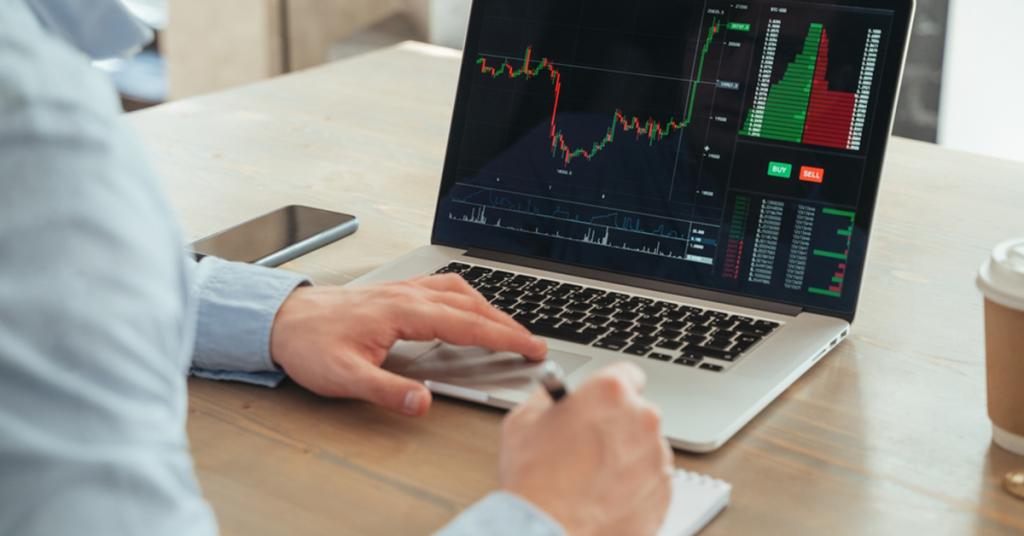
When you first open a trading terminal, the constantly shifting Bid and Ask prices can look like a foreign language. Understanding the math behind these numbers is not just a technical exercise; it is how you determine the real cost of every position you open. Learning to calculate your transaction costs quickly will give you a major edge in managing your account effectively.
What is the spread, and why is it constantly changing?
Think of the spread as a small service fee you pay to the market for the privilege of executing your trade instantly. It is simply the difference between the “Bid” price—the highest price a buyer is willing to pay—and the “Ask” price—the lowest price a seller is willing to accept.
If you are looking for a best cfd broker, you will notice that this gap narrows when the market is busy and expands when things get quiet. High liquidity means lots of buyers and sellers, which keeps the gap tiny. When volume drops, the market maker widens that gap to account for the risk of a sudden, unpredictable price move. It is the cost of doing business in a dynamic, 24-hour marketplace.
How do I actually calculate the spread in “pips”?
To find the spread, you just need to subtract the Bid price from the Ask price. For most major currency pairs, a “pip” is the fourth decimal place in the price quote.
Imagine you are looking at the EUR/USD. The Ask price is 1.0855, and the Bid price is 1.0853. You subtract 1.0853 from 1.0855, which leaves you with 0.0002. Since the pip is the fourth decimal place, you move the decimal point four spots to the right, and you get a spread of 2 pips. It is straightforward math once you get the hang of it, and most modern trading platforms now include a “spread monitor” that does this calculation for you in real-time.
Why do I start every trade slightly in the red?
When you click “buy,” you are immediately matched at the Ask price, which is higher than the current market “Bid” price. If you tried to close that trade instantly, you would have to sell it at the lower Bid price, locking in a small loss.
This initial dip is entirely due to the spread. It is the broker’s way of ensuring they are covered for the transaction. Think of it like paying a small toll every time you drive onto a highway. The road is open, and you can get where you are going, but you have to pay the toll first. If you are using how to calculate spread in forex techniques to monitor your costs, you will quickly see why avoiding high-spread assets is so important for short-term trading strategies.
Does leverage change the amount of spread I pay?
Leverage is a powerful tool that functions a lot like borrowing money to boost your market power, but it does not change the pip cost of the spread itself. However, it does amplify the financial impact of that spread on your overall account balance.
If you use 100:1 leverage to control a position ten times larger than your actual deposit, you are effectively paying the spread fee on that much larger volume. It is easy to ignore these costs when you are focused on a big profit target, but a wide spread combined with high leverage can drain your available margin surprisingly fast. Always calculate your potential spread cost before you hit the execution button to ensure the trade actually makes sense.
What should I look for when comparing broker spreads?
Not all spreads are created equal, and some brokers are much more competitive than others. You want a partner that offers “tight” or “raw” spreads, especially on the major currency pairs that you trade most often.
Look for brokers that provide transparent, real-time pricing feeds and avoid those that hide their costs behind complex commission structures. It is often worth testing a demo account during peak trading hours—such as when the London and New York sessions overlap—to see how tight the spreads really get when the market is moving. A broker that maintains low, stable spreads during busy times is much more reliable for your long-term success than one that offers “zero” spreads but suddenly widens them the moment a major news event drops.
Summary
Calculating the spread is a fundamental skill that turns you from a gambler into a strategic trader. By mastering this simple subtraction, you can instantly see the true cost of every trade and make smarter decisions about which assets to prioritize. Remember to check your spreads during high-liquidity hours, factor those costs into your risk management calculations, and always aim to work with brokers that provide clear, competitive pricing. Treat every pip as a valuable resource, and you will build a much stronger, more resilient trading account over the long run.